
Refrigerator Not Cooling but Freezer Works? What to Check Before Calling a Technician in Santa Clarita
Updated , by Fix Time
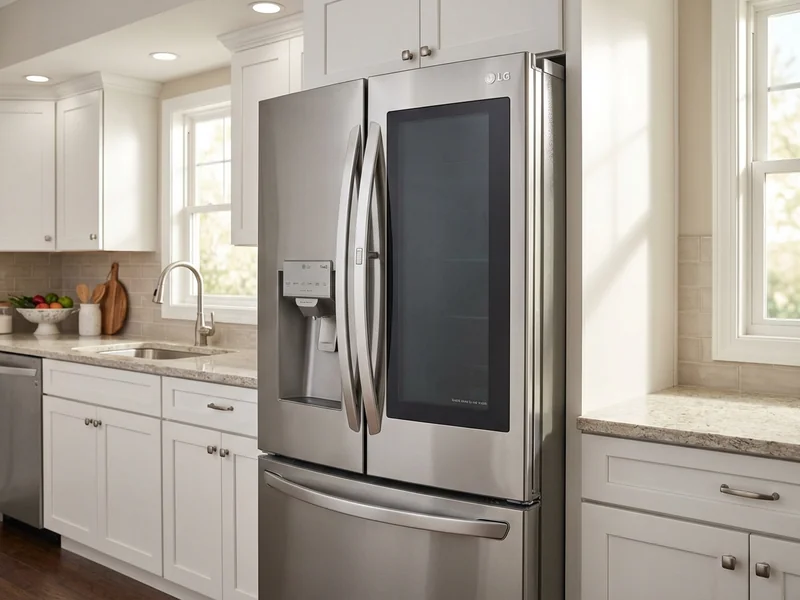
A refrigerator that stops cooling while the freezer keeps working is one of the most common calls an appliance technician gets in the Santa Clarita Valley, and it spikes in summer. The good news: a fair share of these cases are not a failed part at all. The bad news: when a part has failed, the clock on your food is already running.
This guide walks through what to do in the first ten minutes, what the problem usually turns out to be, what a repair costs in 2026, and when a repair stops making sense. Every figure below comes from a food safety agency, a manufacturer or a published cost survey, with the source linked, so you can check it yourself.
Why a refrigerator is not cooling while the freezer works
Most refrigerators sold in the last twenty years have a single cooling system. One evaporator coil sits behind the back wall of the freezer and makes all the cold air. A small fan blows some of that air through a channel, past a damper, into the fresh-food compartment. A thermistor tells the control board when the fridge section is cold enough, and the board opens or closes the damper to hold the set temperature.
So the fridge section depends on three things working at once: the freezer making cold, the fan moving it, and the path staying open. If either of the last two fails, you get exactly this symptom: ice cream stays frozen, milk goes warm. That is why the checks below start with airflow, settings and the room, not with the compressor, which is clearly running if the freezer is cold.
First, the food-safety clock
Before you troubleshoot anything, decide what to do with the food. The limits are not negotiable and they do not care how cold the milk "feels".
- The refrigerator should hold 40°F or below and the freezer 0°F or below, per the CDC's guidance on keeping food safe after an emergency.
- During a power outage an unopened refrigerator keeps food safe for up to 4 hours. After 4 hours without power, foodsafety.gov says to discard refrigerated perishables such as meat, poultry, fish, eggs and leftovers.
- The same page carries a food-by-food chart for anything exposed to 40°F or above for more than 2 hours. Hard cheeses, butter, most condiments and whole fruit survive; raw meat, soft cheeses, cut melon, cooked leftovers and opened baby formula do not.
- A full freezer holds its temperature for about 48 hours, a half-full one for about 24, if the door stays shut.
A refrigerator that is slowly warming up is the same situation as an outage, just harder to time. Put an inexpensive thermometer on the middle shelf. If it reads above 40°F and you do not know for how long, treat perishables as spoiled, move what you can into coolers with ice, and keep the door closed while you check the items below.
Seven checks you can do in ten minutes
None of these need tools beyond a flashlight and a sheet of paper. Work through them in order; the first two solve a surprising number of "not cooling" calls.
1. Read the display before you touch anything
Samsung, LG and several other brands have a demonstration mode for showroom floors that keeps the lights and display on and switches cooling off. It gets triggered by pressing the wrong combination of buttons, often by a child or during a cleaning.
- On a Samsung, the display shows OF OF, O FF, OFF OFF or scrolling temperature bars. Samsung calls it Cooling Off mode and lists the exit steps by model on its troubleshooting page for a refrigerator that is not cooling.
- On an LG, the display reads O F F and the unit will not cool at all. LG's demo mode page explains that the mode "disables all cooling in the refrigerator and freezer sections" and how to leave it.
If the freezer is cold, you are probably not in demo mode, but a quick look at the panel rules it out and takes five seconds.
2. Confirm the set temperatures
Settings get bumped. A bag of groceries pushed against an in-door panel can raise the fridge setting by several degrees, and some models have a vacation or energy-saving mode that relaxes the fresh-food target.
The recommended targets from the manufacturers themselves:
| Brand | Refrigerator | Freezer | Source |
|---|---|---|---|
| Samsung | 38°F | -2°F | Samsung temperature settings |
| LG | 37°F | 0°F | LG temperature adjustment guide |
| Any brand (U.S. DOE) | 35°F to 38°F | 0°F | DOE Energy Saver kitchen appliance tips |
Set the fridge to its coldest normal setting for a test, close the door and wait. A healthy refrigerator should show a clear drop in a couple of hours. If the number on the panel changes but the thermometer on the shelf does not move, the problem is downstream of the control: airflow, fan or damper.
3. Clear the vents and give it two inches
Cold air enters the fresh-food section through vents, usually on the back wall or along the top near the ice maker. A tall pitcher, a sheet cake or a stack of takeout containers pressed against those vents blocks the flow, and the sensor near the vent reads cold while the rest of the box warms up.
Samsung's guidance on the same troubleshooting page: keep about two inches of clearance around the unit for the condenser to breathe, keep the interior vents clear, and if the vents at the back are iced over, that ice has to be cleared before the fridge will cool again. Frost on the vents is itself a clue, which brings us to the defrost system later in this guide.
4. Test the door seal
A gasket that no longer seals lets warm, humid Santa Clarita air in all day. The compressor runs longer, the fresh-food section never quite catches up, and moisture freezes on the evaporator coil.
The U.S. Department of Energy's test is the simplest one: close the door on a sheet of paper or a dollar bill. If it slides out with no resistance, the seal is not holding and the gasket should be replaced. Check the whole perimeter, especially the hinge side and the bottom corners where gaskets tear first. Also make sure the refrigerator is tilted slightly back so the doors swing shut on their own.
5. Check the room, especially a garage refrigerator
Full-size refrigerators are designed for a fairly narrow band of room temperatures. Whirlpool's installation guidance puts it at 55°F to 110°F, and Samsung says a unit in a room above 110°F or below 50°F "will not cool properly".
That matters here more than in most of Los Angeles County. At the NOAA climate station in Saugus, July and August daily highs average in the low to mid 90s, and the station has recorded 115°F (NOAA Regional Climate Center data, Saugus station). A closed garage with a west-facing door runs hotter than the shaded outdoor reading on those afternoons, so a second refrigerator in a Canyon Country or Valencia garage can sit outside its design range for part of a July day, and the fresh-food section is the first thing to drift. Indoors, DOE advises keeping the refrigerator away from ovens, dishwashers and direct sunlight for the same reason.
6. After an outage or a PSPS event, give it time
Power interruptions are part of life in the Santa Clarita Valley. Southern California Edison's Public Safety Power Shutoff program turns off power in high fire-risk areas during dangerous wind events, and the City of Santa Clarita's own home preparedness checklist asks residents to prepare for planned PSPS events as well as unplanned outages.
When power comes back, a refrigerator that has been off for hours needs time to recover, and some models restart in a reduced mode or with the display showing an error. Confirm the breaker is on, the outlet works (plug in a lamp), the display is back to normal temperatures, and engage the fast-cool or Power Cool function if the model has one. Then give it two to four hours before deciding anything is wrong. Use the food-safety clock above for whatever was inside during the outage.
7. Look at the condenser coils
Condenser coils dump the heat the refrigerator removes from the food. On older models they are exposed at the back or behind a kick plate at the bottom; on many newer models they are sealed and need a technician to reach. Dust, pet hair and kitchen grease insulate the coils, and the unit cools less efficiently.
DOE's tip sheet recommends keeping the coils clean on older models and following the owner's manual on how to do it safely. Whirlpool adds a schedule: households with pets, heavy kitchen traffic or construction dust should inspect and clean the coils every 3 to 6 months, while a typical home usually does not need routine cleaning. Unplug the unit, vacuum with a brush attachment, and never bend the fins. Dirty coils rarely cause the fridge-warm, freezer-cold split on their own, but they push a borderline unit over the edge on a 100°F day.
What usually fails when the freezer is cold and the fridge is warm
If the seven checks come up clean, the problem is almost always one of four parts. This is the pattern technicians see across brands; the manufacturers' own pages describe the frost side of it, and Samsung notes that frost on the evaporator or vents blocks airflow even when the food is moved away.
Evaporator fan motor. The fan that moves cold air from the freezer into the fresh-food section stops or slows. Signs: the freezer is cold but you hear no fan when the doors are closed (press the door switch to listen), or a loud buzzing or chirping from the back of the freezer before it went quiet. Ice around the fan blades can also jam it.
Defrost system. Every eight to twelve hours the refrigerator briefly heats the evaporator coil to melt frost. If the defrost heater, defrost thermostat or the timer function on the control board fails, frost builds up over days until the coil is a solid block. Air can no longer pass through it, so almost nothing reaches the fridge section. The tell-tale sign is a sheet of frost or ice on the back wall of the freezer, and the symptom getting gradually worse over a week rather than failing overnight.
Damper or air door. The motorized flap between the freezer and fridge channel sticks shut, freezes shut, or its motor fails. The fan runs, the coil is clear, but the cold air never gets through. Sometimes you can hear the damper clicking as it tries to move.
Thermistor or control board. The temperature sensor in the fresh-food section drifts or fails, and the board thinks the fridge is cold enough when it is not. Less common, and usually diagnosed by reading the sensor's resistance, which is a technician job.
A technician normally finds the culprit in one visit by listening for the fan, checking the coil for frost, testing the damper and reading the sensors, and replacing any of the first three parts is a same-day job when the part is in stock locally.
What refrigerator repair costs in 2026
Prices vary by brand, model and how hard the part is to reach, so treat the figures below as a market range and ask for a quote before any work starts. Angi's 2026 cost guide, based on its project data, reports:
- A national average of $275 per refrigerator repair, with most homeowners paying between $150 and $400 (Angi refrigerator repair cost guide, updated October 2026).
- Minimum service or trip fees of $75 to $125, and labor of $50 to $150 per hour.
- Typical parts, installed: evaporator fan motor $100 to $250, defrost heater $100 to $250, door gasket $75 to $200, control board $200 to $500, compressor $300 to $800.
- After-hours or weekend calls add $50 to $100.
The four parts behind a warm fridge and cold freezer sit at the lower end of that table. The expensive items, compressor and sealed system, are not what fails in this scenario, because a cold freezer proves the compressor is doing its job.
Repair or replace?
A standard refrigerator lasts about 13 years, according to the National Association of Home Builders' study of home component life expectancy; compact models closer to 9. Three questions settle most cases:
- What failed? A fan, heater, gasket or damper on a unit under about 12 years old is a repair. A compressor or refrigerant leak on a unit past 10 years is usually a replacement, unless the compressor is still under warranty.
- What does the warranty cover? Samsung gives 10 years of parts coverage on the digital inverter compressor, with labor terms that vary by model. LG's refrigerator warranties cover the linear or inverter compressor for parts and labor in the early years and parts only for years 6 through 10, with the customer paying labor. If your compressor is covered, the manufacturer's authorized service is the first call; for everything outside warranty, an independent technician can do the same repair.
- How long can you wait? A same- or next-day repair usually costs less than weeks without a refrigerator while a new counter-depth or built-in unit ships. For Sub-Zero, Thermador and other built-ins the math favors repair for much longer, because replacement runs into the thousands and the cabinetry is cut to the appliance.
Two brand-specific notes
Samsung. Besides Cooling Off mode, Samsung refrigerators are sensitive to blocked rear vents and to frost on the evaporator cover; the company's own pages list clearing iced-over vents as a step, and frost that returns within days of a manual thaw points to the defrost system, so book a repair rather than repeating the thaw. See Samsung refrigerator repair for the common faults by model line.
LG. LG's linear compressor models run quietly, so a silent freezer is not by itself a sign of trouble; check the display for the OFF demo code first, then listen for the evaporator fan with the door switch pressed. A fridge section hovering in the mid-40s no matter the setting often means a stuck damper. LG refrigerator repair follows the same diagnostic path.
When to call
Call a technician when the seven checks come up clean and the shelf thermometer stays above 40°F after a few hours, when frost keeps coming back on the freezer wall, when the fan has gone silent, or when the problem is in a built-in or a unit still under warranty you do not want to void.
Fix Time repairs refrigerators and freezers across Santa Clarita, Valencia, Stevenson Ranch, Castaic, Canyon Country and the San Fernando Valley, with same-day appointments on most days and a quote before any repair starts. Fresh-food problems like the ones above are usually a single visit. If the freezer is also warm, the freezer repair page covers that scenario, and the refrigerator repair service page lists brands and common faults. Homeowners in the valley can check coverage for their neighborhood on the Santa Clarita appliance repair page.
Call (909) 698-8788 or book online, and have the model number from the sticker inside the fresh-food door ready: it lets the technician bring the right fan, heater or damper on the first trip.
Frequently asked questions
Why is my refrigerator not cooling but the freezer works?
On most modern refrigerators one evaporator in the freezer makes all the cold air, and a fan pushes part of it into the fresh-food section. If the fan stops, the evaporator coil frosts over, or the damper between the two sections sticks shut, the freezer stays cold while the fridge warms up. Settings, demo mode, blocked vents and a hot room cause the same symptom and are worth ruling out first.
How long is food safe in a refrigerator that stopped cooling?
Food safety agencies set 40°F as the limit. During a power outage an unopened refrigerator keeps food safe for up to 4 hours; perishable food such as meat, poultry, fish, eggs and leftovers that has been at or above 40°F for more than 2 hours should be thrown out. Put a thermometer inside and go by the reading, not by how cold the food feels.
My Samsung refrigerator shows OF OF on the display. Is it broken?
No. OF OF, O FF, OFF OFF or scrolling temperature bars on a Samsung display mean the refrigerator is in Cooling Off mode, also called Demo or Shop mode. Cooling is switched off on purpose. The exit sequence depends on the model; Samsung publishes the steps on its support site, and the fix takes seconds.
Is it worth repairing a 10-year-old refrigerator?
A standard refrigerator lasts about 13 years on average, so a 10-year-old unit with a failed fan, defrost heater or door gasket is normally worth repairing. A failed compressor or sealed-system leak on a unit near the end of that range usually is not, unless the compressor is still covered by the manufacturer's long parts warranty.
Can I use a refrigerator in my garage in Santa Clarita?
Manufacturers rate full-size refrigerators for rooms between roughly 55°F and 110°F. Santa Clarita's July and August afternoons average in the low to mid 90s and have reached 115°F, and a closed garage runs hotter than the shaded outdoor reading. A garage refrigerator can work most of the year but may struggle on the hottest afternoons; keeping it away from the sun-facing wall and giving it clearance helps.